The Complete History of Cinema: From Silent Films to Streaming
Step inside the story of how movies were born, grew up, and conquered the world. From the first flickering images of the late 1800s to the epic blockbusters and streaming hits of today, this guide takes you through every major era of cinema. Discover the pioneers who shaped film, the golden moments that defined Hollywood, the global movements that broke the rules, and the technology that transformed the big screen forever.
PJNog
8/16/202513 min read
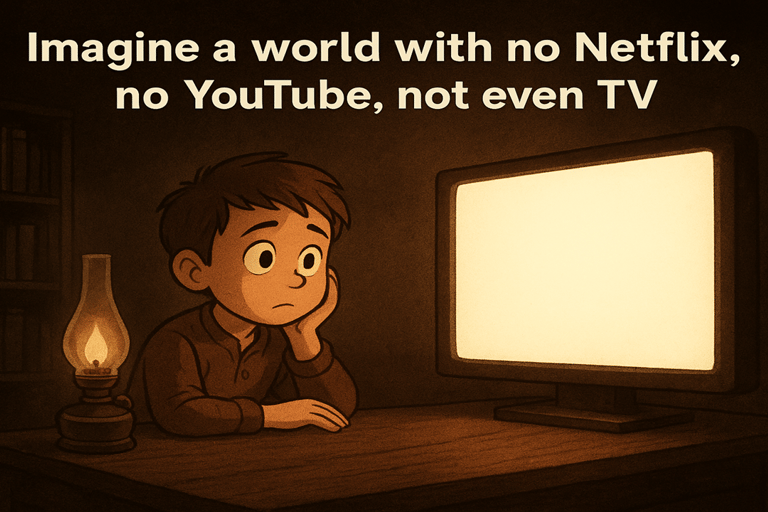
Imagine a world with no Netflix, no YouTube, not even TV.
Movies didn’t just appear one day. They started as tiny, flickery experiments in the 1800s, little moving images that made people gasp, laugh, or duck for cover when a train seemed to rush right at them.
Over the years, those experiments turned into epic adventures, tear-jerkers, superhero showdowns, and jaw-dropping visual feasts.
So, grab your popcorn, buckle your seatbelt, and let’s zoom through the entire history of cinema, from wobbly black-and-white clips to the blockbusters we binge today.
What If you wanted a story, you had to read it in a book… or listen to your grandpa tell it for the hundredth time... No TV, No Youtube... NO Netflix....
💭Imagine a dark room, a white screen, and moving pictures dancing right in front of your eyes, like magic!
That’s how the wild ride of cinema began, and trust me, it’s one heck of a story.
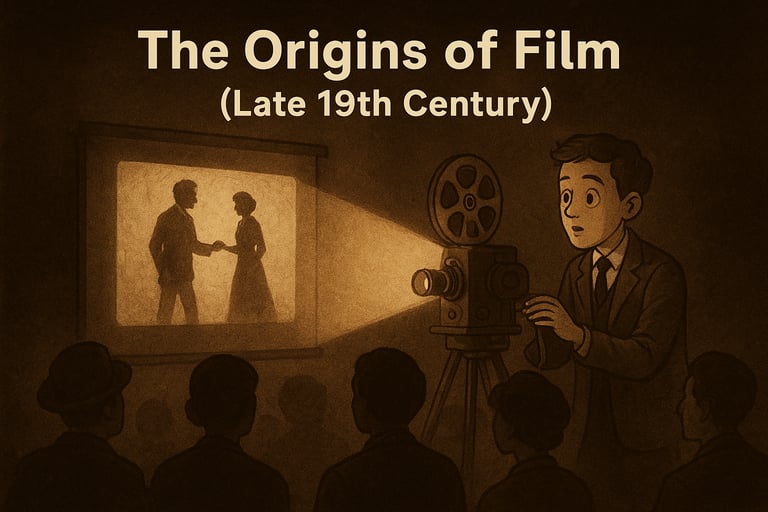
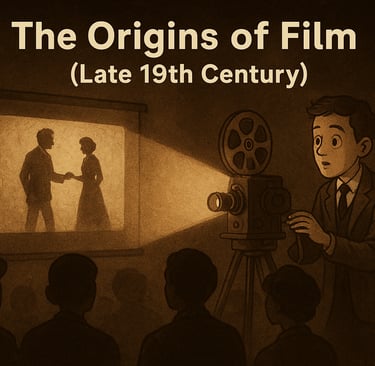
The Origins of Film (Late 19th Century)
💭Close your eyes for a second, and imagine living in a time when electricity was still a fancy new thing. Suddenly, someone invites you to see “moving pictures.”
You sit down, the lights go out, and there on a big white sheet, a horse gallops toward you… and it’s not a painting, it’s moving!
No wonder people thought it was pure magic.
The very first movies weren’t like the ones we know today. In the late 1800s, clever inventors in different parts of the world were tinkering with machines that could show pictures so fast, they looked like they were moving.
In the United States, Thomas Edison and his team built something called the Kinetoscope. It was a wooden box with a peephole on top, and if you peeked inside, you could watch a short film all by yourself.
Meanwhile in France, two brothers named Auguste and Louis Lumière came up with an even cooler gadget called the Cinématographe.
This one could record, develop, and project films onto a big screen so lots of people could watch together. In 1895, they held the first paid public screening of movies in Paris, and the audience was blown away.
Imagine seeing a train pull into a station in full motion for the very first time, some people even jumped out of their seats, thinking it might run them over.
These early films were super short, usually less than a minute, and showed everyday things like workers leaving a factory, waves hitting the shore, or funny little skits. But they sparked something big. People began to realize that this new “moving picture” magic could tell stories, capture history, and maybe even change the way we see the world.
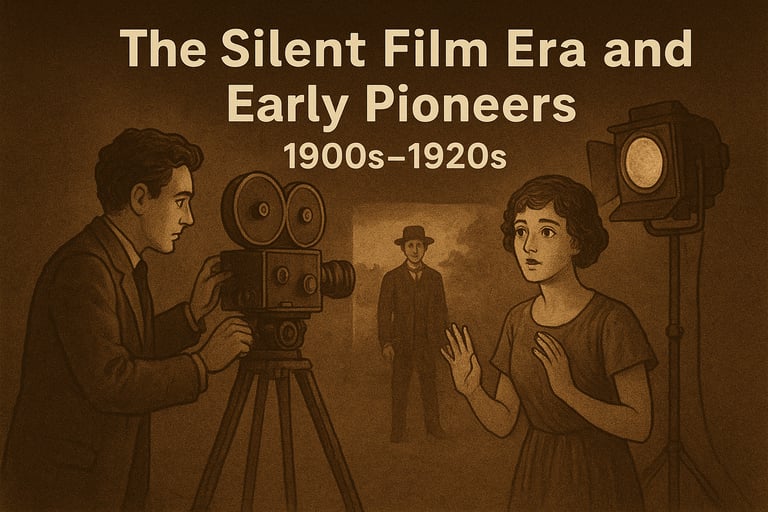
The Silent Film Era and Early Pioneers (1900s–1920s)
💭Imagine watching a movie where nobody talks, but you still understand every joke, every tear, and every moment of suspense. All you hear is a live piano or maybe a whole band playing along, making the action on screen even more exciting. This was the age when movies learned to tell stories without saying a single word.
In the early 1900s, filmmakers got braver and started making longer, more creative films. One of the first big movie magicians was a Frenchman named Georges Méliès. He loved tricks and illusions, and he used them to make wild, dreamlike films. His most famous one, A Trip to the Moon (1902), showed a rocket landing right in the eye of the moon, and audiences couldn’t believe their eyes.
Across the ocean in America, Edwin S. Porter made The Great Train Robbery in 1903. It was only about 12 minutes long, but it told a complete story, with bandits, chases, and a shocking moment where an outlaw points his gun right at the camera. It made people jump, and made them realize movies could be thrilling adventures.
Then came D.W. Griffith, a director who took movie storytelling to a whole new level. He figured out how to cut between different scenes to build tension, zoom in for close-ups, and move the camera so the audience felt right in the middle of the action. His film The Birth of a Nation (1915) was a huge hit for its technical brilliance, though it was also deeply controversial for its racist themes.
Silent movies didn’t just survive without words, they thrived. Audiences laughed at Charlie Chaplin’s bumbling tramp character, gasped at daring stunts from Buster Keaton, and cheered for the heroes of countless adventure serials. With clever acting, expressive faces, and creative camerawork, these films proved that movies could speak directly to the heart without making a sound.
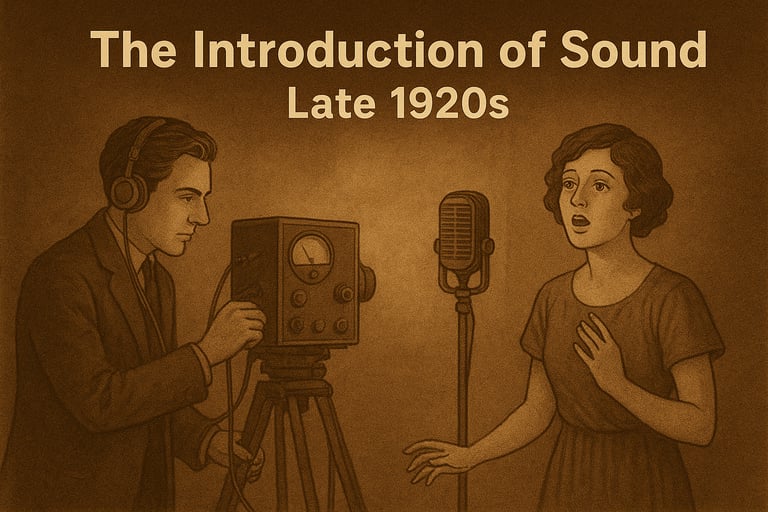
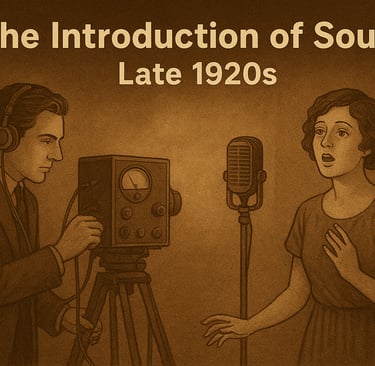
The Introduction of Sound (Late 1920s)
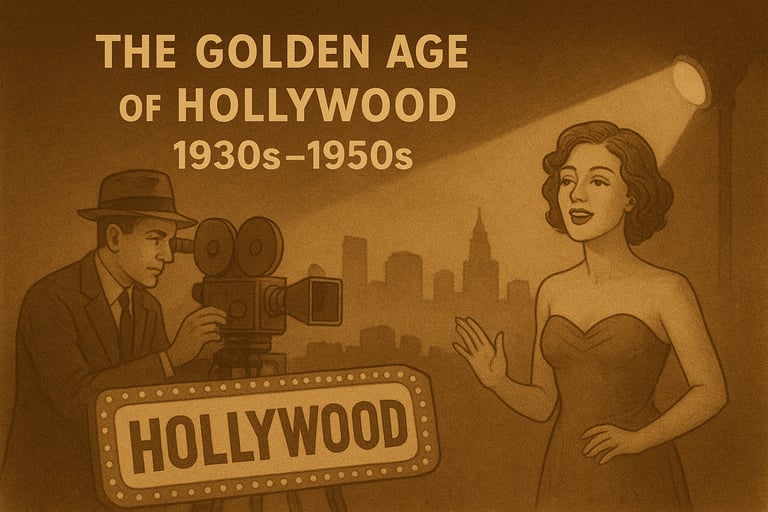
The Golden Age of Hollywood (1930s–1950s)
💭For decades, movie stars could make you laugh, cry, or grip your seat without saying a single word. Then, one day, a voice came out of the screen. It wasn’t magic, it wasn’t a ghost… it was the future of cinema. And when the first song and line of dialogue hit the audience’s ears, people knew movies would never be the same again.
In 1927, a film called The Jazz Singer changed everything. Most of the movie was still silent, but in a few scenes, the star, Al Jolson, actually spoke and sang. “You ain’t heard nothin’ yet,” he told the crowd, and he was right. The technology behind it, called Vitaphone, synced a record player with the movie projector so sound and picture matched.
It wasn’t perfect. The equipment was bulky, and sometimes the sound would go out of sync. But audiences didn’t care, they were amazed. Very quickly, sound-on-film systems replaced the old methods, and by the early 1930s almost every movie was a “talkie.”
The arrival of sound didn’t just add voices, it opened up whole new worlds for filmmaking. Musicals exploded in popularity, with catchy songs and big dance numbers. Comedies got even sharper with witty dialogue and fast-talking characters. Horror movies became scarier when you could hear creaking doors, thunder, and ghostly moans. And even cartoons got a boost, Mickey Mouse whistled his way into fame in Steamboat Willie (1928).
For some silent stars, the transition was rough.
Not everyone had a voice that matched their glamorous image, and acting styles had to change to fit the new realism of sound. But for audiences, it was thrilling. The movies could now sing, shout, whisper secrets, and tell stories in a way no one had ever experienced before.
💭Picture giant movie palaces with sparkling chandeliers, velvet seats, and a crowd dressed in their Sunday best. The lights dim, the curtain rises, and for the next two hours you’re swept into a world of romance, adventure, and dazzling Technicolor. This was Hollywood at its most glamorous, where every film felt like a ticket to another universe.
By the 1930s, Hollywood had mastered the art of making movies that looked and sounded amazing. Big studios like MGM, Warner Bros., and Paramount ran the show, cranking out films like clockwork. Stars became larger-than-life icons, Clark Gable, Katharine Hepburn, Humphrey Bogart, and Judy Garland were household names, and audiences couldn’t get enough of them.
Genres flourished. There were musicals bursting with color and energy, screwball comedies with lightning-fast banter, crime dramas filled with smoky shadows, and sweeping epics that transported viewers across time and space. In 1939 alone, moviegoers got Gone with the Wind and The Wizard of Oz, both now considered legends of cinema.
Technicolor brought a new wow factor, making reds, blues, and yellows pop off the screen like never before. Movie theaters themselves became works of art, often called “picture palaces,” complete with grand lobbies and ornate details that made the experience feel magical from the moment you stepped inside.
Even during hard times like the Great Depression and World War II, people flocked to the movies for escape and inspiration. Hollywood also rallied behind the war effort, making patriotic films and morale-boosting stories for soldiers and civilians alike.
But change was on the horizon. In the late 1940s, television started appearing in living rooms, and weekly movie attendance began to dip. Hollywood fought back with bigger screens, epic spectacles, and innovations like Cinemascope to remind people that nothing could beat the magic of the theater.
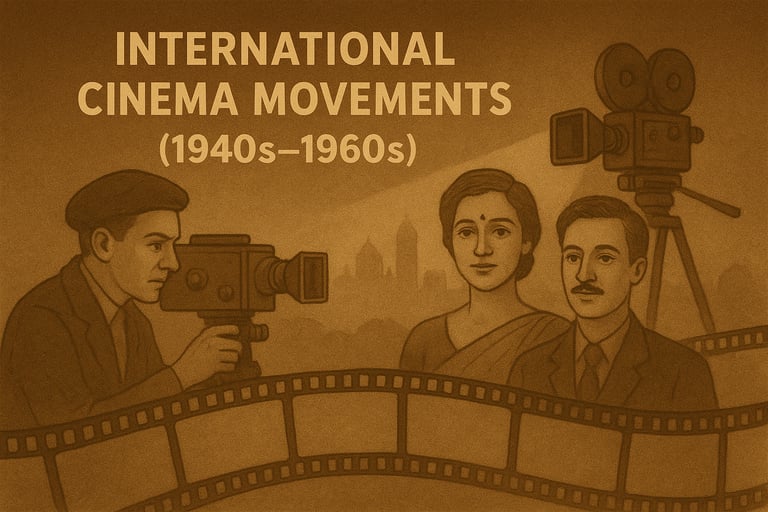
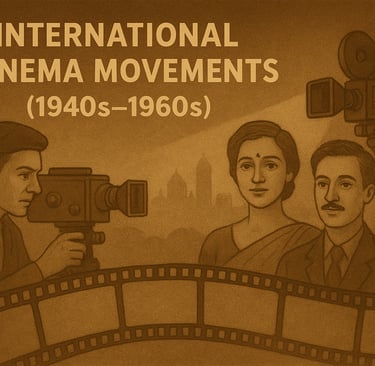
International Cinema Movements (1940s–1960s)
💭Imagine walking into a theater and seeing a movie that feels so real, it’s like you’re spying on everyday life. Or one that breaks all the “rules” you’ve seen in Hollywood, with jumpy cuts, sudden camera moves, and endings that don’t tie everything up in a neat bow. Around the world, filmmakers were rewriting the rulebook, and audiences were discovering brand-new ways to fall in love with movies.
In Italy, the cameras left the fancy studios and hit the streets. This was Italian Neorealism, where directors like Roberto Rossellini and Vittorio De Sica told heartfelt stories about ordinary people struggling in the aftermath of World War II. Bicycle Thieves (1948) wasn’t about glamorous heroes, it was about a father and son searching for a stolen bike, and it broke hearts everywhere.
Over in France, a group of young filmmakers decided they’d had enough of the “old way” of making movies. This became the French New Wave, led by Jean-Luc Godard, François Truffaut, and Agnès Varda. They shot on real streets, used handheld cameras, and didn’t mind breaking editing rules. Films like Breathless (1960) felt fresh, playful, and full of rebellious energy.
Meanwhile in Japan, cinema was experiencing a golden moment. Directors like Akira Kurosawa made epic adventures like Seven Samurai (1954), while Yasujirō Ozu created quiet, emotional masterpieces like Tokyo Story (1953). These films showed the world that great storytelling could be epic or intimate — and sometimes both at once.
These movements didn’t just entertain, they inspired filmmakers everywhere. They proved that movies didn’t have to follow one formula. You could tell stories your own way, and if they came from the heart, audiences around the globe would listen.
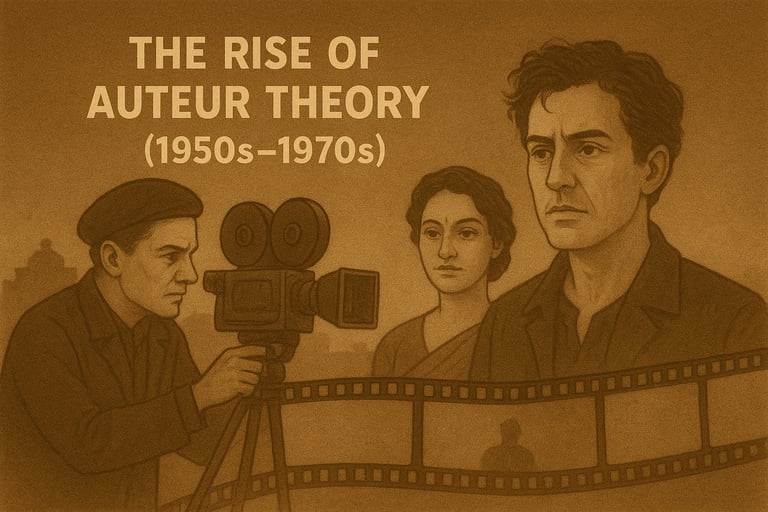
The Rise of Auteur Theory (1950s–1970s)
The idea was simple but powerful, the auteur theory said the director is the “author” of the movie. Just like a writer has a voice in books, a director leaves their personal stamp on films. This idea came from French film critics, especially François Truffaut, before he became a filmmaker himself. They believed that the best directors had a style you could recognize instantly, no matter what story they told.
Soon, critics and fans began celebrating directors like Alfred Hitchcock for his suspenseful twists, Federico Fellini for his dreamlike imagery, and Akira Kurosawa for his sweeping epics. In America, the concept started to catch on, and the director’s name on a poster became a selling point, “A film by…” suddenly meant something exciting.
By the late 1960s, Hollywood’s old rules were breaking down, and the rise of the auteur fit perfectly with the times. Young directors were given more creative freedom, making bold, personal films that didn’t always play it safe. They experimented with storytelling, tackled deeper themes, and weren’t afraid to leave audiences thinking instead of just entertaining.
The auteur era helped prove that movies could be more than just products, they could be personal visions. And for movie lovers, it meant you could follow a director’s work like you follow your favorite band, waiting to see what they’d come up with next.
💭 Imagine if every time you watched a movie, you could tell who made it just by the style, the colors, the way the camera moved, kind of like recognizing a famous painter’s work. In this era, directors started being seen not just as workers behind the camera, but as artists with their own signature, and some became just as famous as the stars on screen.
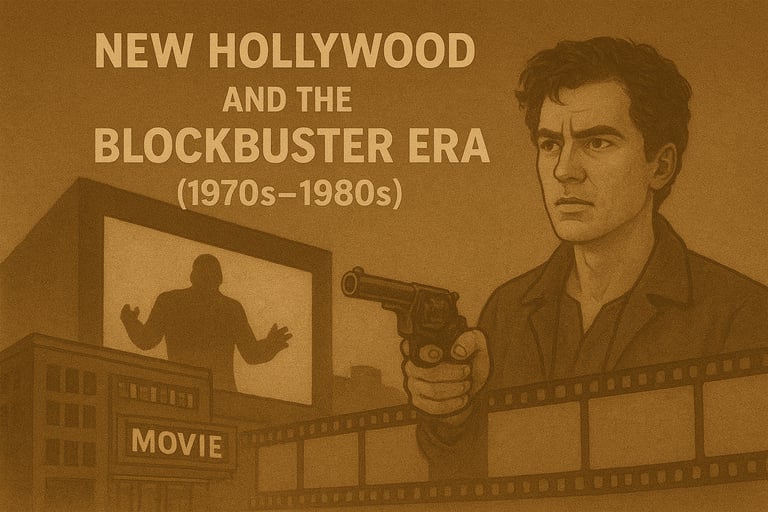
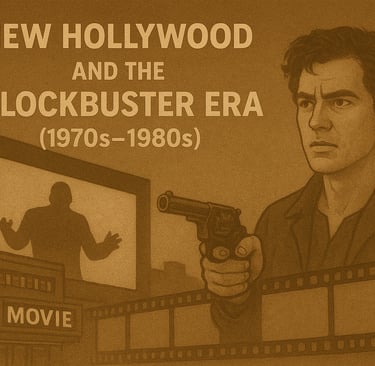
New Hollywood and the Blockbuster Era (1970s–1980s)
💭Picture a wave of fearless young filmmakers charging into Hollywood like rebels with cameras, breaking all the old rules. Now imagine that, just a few years later, the movies they made were so huge and exciting that people lined up around the block to see them, and Hollywood realized, “Hey, maybe big can get even bigger.”
In the late 1960s and early 1970s, a new generation of directors like Francis Ford Coppola, Martin Scorsese, George Lucas, and Steven Spielberg shook up the industry. They made movies that were gritty, personal, and connected with younger audiences, from the crime saga of The Godfather to the moody streets of Taxi Driver.
Then came a game-changer: in 1975, Spielberg’s Jaws terrified beachgoers everywhere, becoming the first true summer blockbuster. Two years later, George Lucas’s Star Wars blasted into theaters with lightsabers, space battles, and unforgettable characters, creating a galaxy of fans and showing Hollywood the power of big, crowd-pleasing spectacles.
The studios quickly caught on. In the 1980s, they focused on “tentpole” movies, huge hits that could carry the whole year. We got adventures like Indiana Jones, time-travel fun with Back to the Future, heart-pounding action in Top Gun, and the start of superhero fever with Superman and Batman.
This was also the era when home video exploded. VHS tapes and later DVDs meant you could watch your favorite movies over and over without leaving the couch. Multiplex theaters popped up everywhere, offering multiple screens so you could pick your blockbuster of the week.
By the end of the ’80s, Hollywood had found its golden formula: mix thrilling stories with big special effects, make them unforgettable, and watch the audiences (and sequels) roll in.
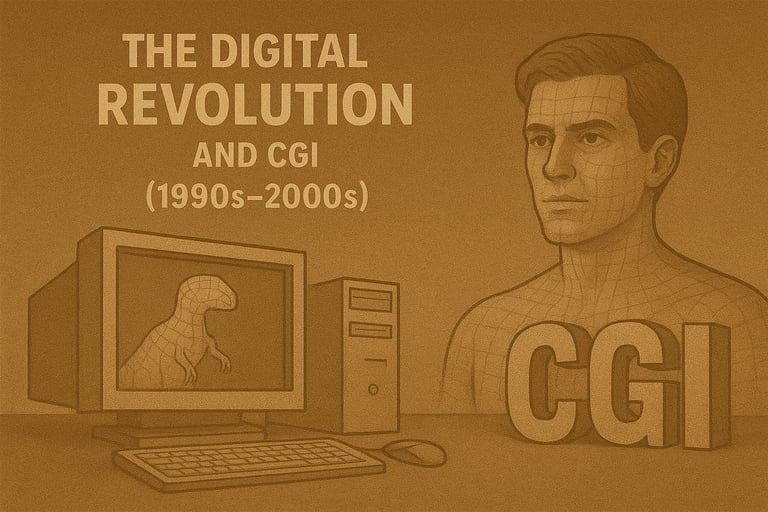
The Digital Revolution and CGI (1990s–2000s)
💭Imagine dinosaurs that look so real you swear they could walk right off the screen, or toys that come to life and talk to each other. In the ’90s, computers didn’t just change how we used the internet, they completely rewired the way movies were made, and what we thought was possible.
In 1993, audiences’ jaws dropped when Jurassic Park brought lifelike dinosaurs to the big screen using something called CGI, computer-generated imagery. Just two years later, Toy Story became the first entirely computer-animated movie, proving that CGI wasn’t just for monsters and explosions, it could create whole worlds.
The 1990s and 2000s were a tech playground for filmmakers. Special effects reached new heights with The Matrix and its famous “bullet time” slow-motion spins, and fantasy epics like The Lord of the Rings used motion-capture technology to bring characters like Gollum to life.
It wasn’t just effects, the way movies were filmed and shown changed too. Directors started shooting with digital cameras instead of film, and editors cut scenes on computers instead of slicing film strips. By the 2000s, most theaters had swapped out old film projectors for shiny digital ones, making images clearer and easier to send worldwide.
Home entertainment got a boost as well. DVDs replaced VHS tapes, offering sharper images, bonus features, and a menu you could click through. Big hits like Avatar (2009) pushed 3D back into the spotlight, giving audiences a new reason to leave the couch and head to the theater.
The digital revolution didn’t just make movies look cooler, it gave filmmakers the freedom to dream bigger, stranger, and more spectacular than ever before.
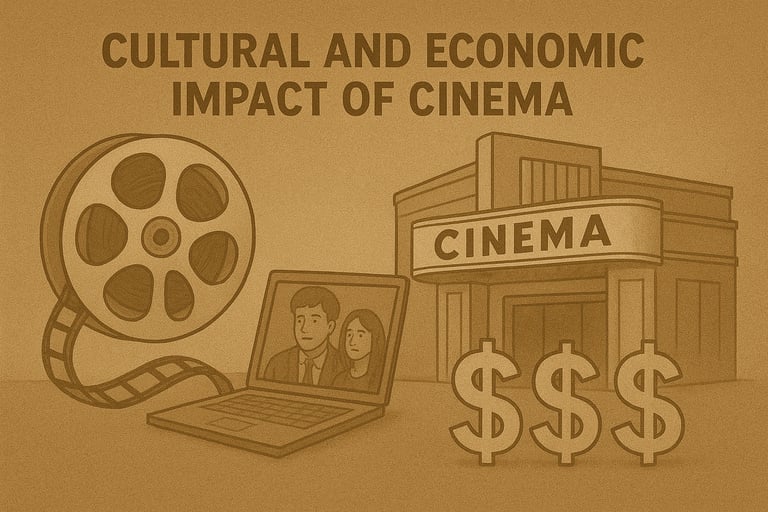
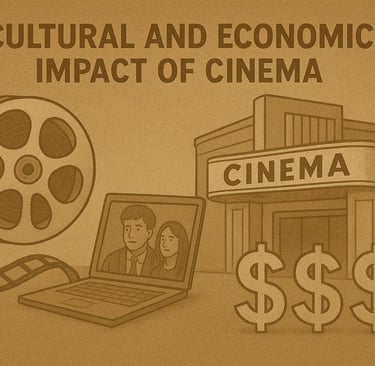
Cultural and Economic Impact of Cinema
💭Think about the last time a movie made you laugh until your stomach hurt, cry like you’d lost a best friend, or jump so high you spilled your popcorn. Movies don’t just entertain us, they shape the way we see the world, the way we dream, and sometimes even the way we live our lives.
From tiny silent shorts to billion-dollar blockbusters, cinema has become one of the most powerful storytelling tools on Earth. It travels across languages and borders, letting someone in Brazil, Japan, or South Africa feel the same emotions watching the same story. Hollywood’s glow has spread worldwide, but so have the voices of filmmakers from every culture, bringing their own styles and perspectives to the screen.
Movies influence fashion, music, slang, and even the way we think about important issues. A single film can inspire a social movement, make a hidden problem impossible to ignore, or give hope to people who feel alone. They can also preserve history, capturing the sights, sounds, and feelings of a time so future generations can experience them.
On the money side, cinema is a giant industry. Big films can earn billions at the box office, create jobs for thousands of people, and inspire tourism to filming locations. Studios turn hit movies into sequels, merchandise, video games, and theme park rides, proving that a good story can live far beyond the theater.
Film festivals and awards like the Oscars help spotlight unique voices and bring attention to movies that might otherwise fly under the radar. At the same time, streaming services have made it easier than ever for audiences to find and enjoy those hidden gems.
In the end, movies are more than just pictures on a screen. They’re our shared campfire stories, told with light and sound, laughter and tears. No matter how the technology changes, the heart of cinema will always be the same, a way for humans to connect, imagine, and dream together.
Love movie magic as much as we do? 🎬
Join our newsletter and get fresh stories, behind-the-scenes secrets, and cinematic deep dives delivered straight to your inbox. From forgotten classics to the hottest streaming gems, we’ll keep your popcorn bucket full of film goodness. Sign up now and never miss your next great watch! 🍿
Streaming and Contemporary Cinema (2010s–2020s)
💭Remember when you had to wait months for a movie to come out on DVD? Now you can finish dinner, open an app, and watch a brand-new blockbuster in your pajamas before dessert. In this chapter, the movie theater isn’t gone, but your living room has become the coziest cinema in town.
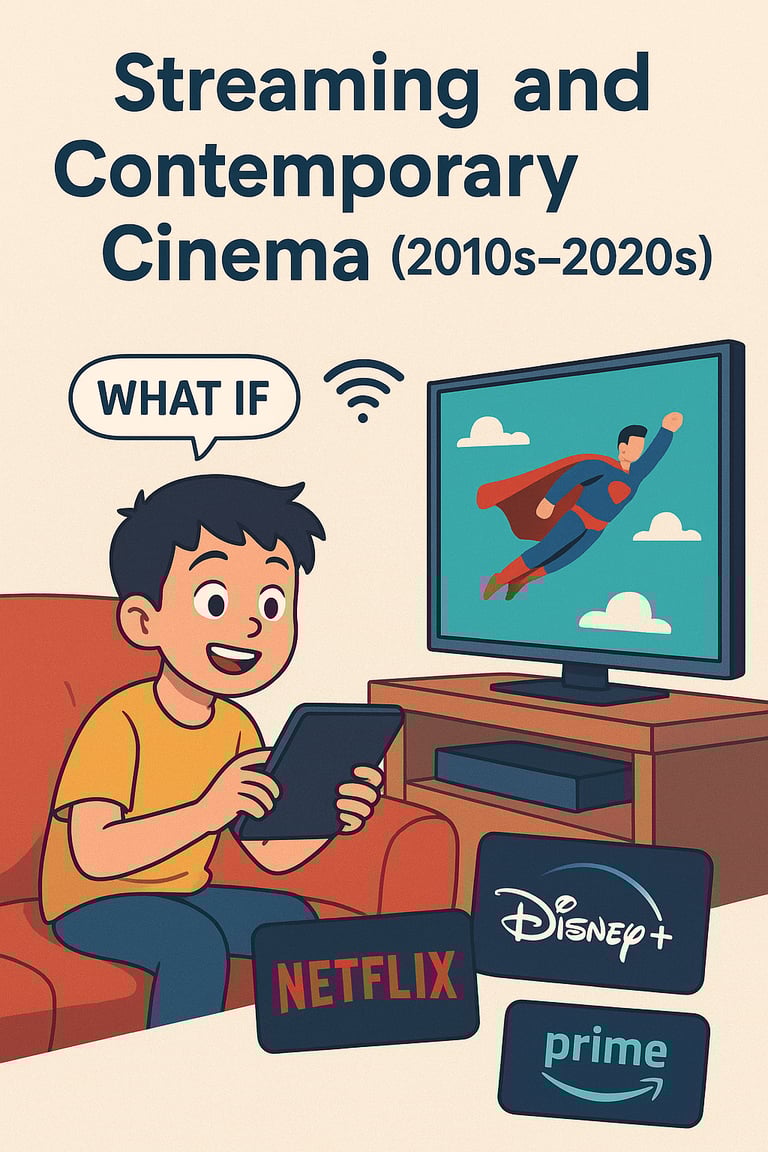
In the 2010s, high-speed internet and smart devices transformed how we watch movies. Platforms like Netflix, Amazon Prime, and Disney+ started streaming films directly to our TVs, laptops, and phones. Suddenly, you didn’t have to plan a trip to the theater, the theater came to you.
Big studios caught on fast. They began making movies designed to premiere online, sometimes skipping theaters completely. Streaming opened doors for more diverse stories too, letting audiences discover films from all over the world with just a click.
Then came 2020, when the pandemic shut down cinemas worldwide. Studios released major films like Wonder Woman 1984 and Mulan straight to streaming, a move that once felt impossible. This sped up a trend that was already happening, shorter waits between theater and home, and more films going digital-first.
Still, theaters aren’t gone. Big-screen spectacles like superhero blockbusters, epic sci-fi, and major franchises still draw crowds for that “shared excitement” you can’t quite get at home. But for smaller dramas, comedies, or international films, streaming has become the main stage.
Today, audiences have more choice than ever. Whether you want to feel the rumble of an IMAX seat or curl up with a tablet, cinema has adapted to fit your life. The story of movies isn’t ending, it’s just found another screen to shine on.
SUBSCRIBE
© 2025. All rights reserved.
❤️ Fuel the Mission
0xb290c0a98D8eC5DcFeAfFD7E1884ad7A38342A37